Is Public Relations Necessary in Sports? You Decide

Every season, every sport, every year there are millions of sports fans cheering in stadiums and living rooms around this country and around the world, yet very few people acknowledge or even praise those behind-the-scenes workaholics within the public relations profession. So, is public relations a necessary aspect in the sports industry? I believe that it is, and this has been particularly noticeable during these last few years


sports PR pic 1       sports PR pic 2

One of the principal roles of public relations within the sports industry is to promote a positive image. Whether this is a sports team itself, a particular league, a coach, an athlete or sponsor, every part of the sports industry relies profoundly on its image and how the public audience and their fans see and interpret it. Therefore, to generate successful marketing strategies and product education, representatives of public relations must be continuously aware of their surroundings.


sports PR pic 3               sports PR pic 4

sports PR pic 5     sports PR pic 6

Some detailed examples of the public relations’ importance to the sports community include instances like those with former NFL quarterback Michael Vick or former Los Angeles Lakers player Kobe Bryant. Both of these athletes demonstrated irresponsible behaviors which proved the necessity of public relations in the sports world. The bottom line is that without it, both of these athletes’ careers would have been endangered even more than it already was, and the public’s respect and support of their respective teams would have been in danger, as well. It is imperative that public relations representatives are skilled to handle situations like these especially in this world of media frenzy that we live in today.

I believe it is a public relations representative’s role during these crises to not only support the athletes, but also to ensure a positive image of the team and organization is also depicted. By doing this, it helps guard against those fans that are developing a negative perception of the athlete or team. Today, sports teams have constructed very explicit brand images for their organizations solely so that they can continue to stay on good terms with their fanbase.

As a professional and in many cases now even college and amateur athletes, their private life is literally public interest. That’s how society is with tabloids and media.

Additionally, I feel that public relations is also critical to the sports industry when an athlete is making a career move. Numerous athletes and coaches favor dealing with trading and retirements in private rather than avoid losing a fan base and to maintain that positive personal image. By negotiating matters privately or through specific agencies, athletes and coaches alike can avoid dealing with the media as much as possible. Many choose to take this route.
sports PR pic 7       sports PR pic 8

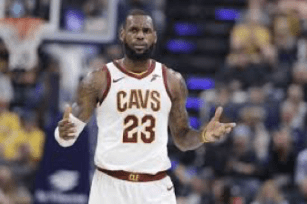
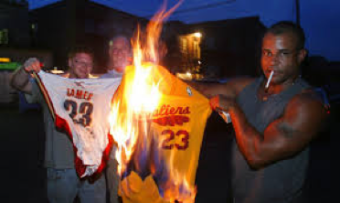
As we’ve all witnessed however, trades and retirements conducted in full view of the public can be both detrimental to a player and or a team image. Remember when LeBron James was traded from the Cleveland Cavaliers to the Miami Heat, he kept his fan base, the general public and the media on the edge of their seats for a long-drawn-out amount of time. Even more, because of the way he approached his trade, James departed his hometown of Cleveland on very bad terms. Fans were outraged and took to social media as well as the streets to voice their displeasure.


sports PR pic 9           sports PR pic 10

In a very comparable way, many sports fans have mixed feelings about the former NFL Hall of Famer Brett Favre and his short stay with the Minnesota Vikings. Many around the country felt that he demonstrated very indecisive mannerisms about his retirement during his last couple of seasons. There was even an interview held between USA Today and Brett Favre discussing how he believed that the media had unfairly caused unnecessary drama about his retirement date. In that interview, Favre explained that he would not intentionally prolong his decision for further attention and that his decision to return for a 20th season was largely based on his health. This was an important interview and a critical public relations release for this highly successful and beloved athlete.


sports PR pic 11           sports PR pic 12

While there are countless players that strive for the added attention, a few teams are willing to take public relations hits as long as they sense that the player can still perform. A great example of this was former NFL Redskins Albert Haynesworth. He had caused numerous problems with the team and violated several of the league’s standards. Nonetheless, because the Redskins had such a huge investment in him, public relations representatives realized that they were to continue to promote the athlete. Unless the team could gain value with a trade to benefit the organization, Haynesworth would likely remain a Redskin because of his ability to perform. Eventually, he would be traded and problems continued to follow him.

The unfortunate thing is that teams will put up with a lot if they think the player will help them win. This is true for both professional and college teams as well and we see this unfold every season with a variety of teams, schools, athletes and coaches.

As we have seen, when a crisis or controversy happens, it is imperative that athletes and teams are provided the opportunity to convey their own messages through effective communication. This is where the public relations play a vital role. A public relations representative communicates directly with the public and possesses the ability to deliver official comments and statements when teams or their athletes are in trouble or dealing with a crisis. PR personnel can approach the media themselves or prepare the coach or athlete with an appropriate statement in a timely manner. It is critical to control any damage and address the public as quickly as possible immediately following any type of crisis.


sports PR pic 13                sports PR pic 14

One example of this not occurring in a timely manner was with the Tiger Woods incident a few years ago. It is still not quite clear whether the delayed response from Tiger Woods was the fault of his International Management Group, his sports agency or Woods’ decision alone, but one thing for sure, the delayed response hurt Tiger Woods’ image for a long time. A quicker and more clear response addressing the public could have possibly helped this situation. When the issue was finally addressed several weeks into the scandal, Tiger Woods released his own apology statement but refused to take any questions. Again, by not initially being upfront and honest with the public in a timely manner, he gave the media and the public plenty of time to make their own accusations about his cheating scandal.

As long as we’ve had sports and reported on our athletes, fans have had a morbid curiosity about each and every detail of their lives.  So as much as these athletes would like to separate their professional and public life, they need to realize that it simply comes with the territory. It’s simple. Effective communication to the public, media and other organizations is absolutely essential. Lastly, I’ll wrap this up with one final example, PR professionals frequently use press releases to promote upcoming games, events, fundraisers or any breaking news. Press releases are a direct way that the public and media are both notified of events and the details concerning it.

Public relations representatives take both the risks and responsibilities of working within sports organizations. As a result of their dedicated and detailed work, public relations, I believe, remains essential to the sports industry, contributing to the success of not only the athletes themselves, but their teams and coaches.

If you’re interested in a fantastic illustration of an issue that those within the sports public relations arena were forced to deal with recently, then take a look at the following link. How well do you think they did their job? Anyone feel that public relations isn’t necessary in sports?

https://www.washingtonpost.com/sports/if-michael-sam-goes-undrafted-nfl-might-have-a-public-relations-problem-on-its-hands/2014/05/06/0e7697a0-d547-11e3-8a78-8fe50322a72c_story.html?noredirect=on&utm_term=.23b0ae044d41

The consistent biased media coverage of female Olympic athletes

I don’t think anyone would challenge the fact that there’s been an incredible amount of progress in women’s sports. Before Title IX passed, women made up 2 percent of college athletes and 7 percent of high school athletes. However nowadays, women incorporate approximately 43 percent of the college students that compete in sports and 41.5 percent of students partaking in high school sports. That number is mindboggling! It is a increase of more than 400 percent. Yet, the sports media is still having difficulty and challenges regarding this issue. The media coverage, no doubt, has a long way to go in order to cover the achievements of these female athletes objectively and fairly. It’s an extremely difficult task for female athletes to break down specific barriers, despite the progress they’ve made.

Pictureb          Picturea                                                                                                    

I found an example of this media bias recently involving an Australian tennis commentator Ian Cohen. He asked Canadian tennis star Eugenie Bouchard to twirl and show off her outfit. This was not a walking, runway or a red-carpet event that Bouchard was at. Actually, she had just finished crushing her competition in the Australian Open. During a press conference, Bouchard stated later, that she is fine being asked to twirl if they (the news media) ask guys to flex their muscles.

This is not funny or something to take lightly. It’s really unfortunate because, this certain instance with Bouchard is not a rare occurrence at all. In fact, many times often in media interviews, female athletes are asked about non-sport related topics, like who they are dating, what they are wearing or about their personal lives. Why? You don’t usually hear male athletes being asked those questions. It’s quite common nowadays in news headlines, for the focus of women’s sports to be on physical attractiveness. Even sports news commentators make female athlete’s appearances a focus. Some time back, Fox news held a debate about whether female Olympic athletes should wear makeup. Again, why are we debating this? Female athletes are subject to critiques and criticisms of their appearance, and more often than not words like “sexy” and “quite attractive” are attached to women in sports rather than words like “strong” or “fit.” Another great example of this is tennis player Maria Sharapova. She is certainly a key example of an athlete that receives much more media attention for her looks instead of her athletic abilities on the court. There is actually research that has indicted that commentators seldom report on Sharapova without also commenting on her appearance.

Picture1                       Picture2

I absolutely understand that money follows the exposure and attention and it’s a fact that women’s tennis is arguably the most commercially popular and successful among all women’s sports, probably because it is an individual sport that draws a greater percentage of male followers than other women’s sports. Why do you think this is?

Let me present another scenario for you to ponder. Remember the amazing sprinter Marion Jones? How about Amy Acuff?

                Picture3                      Picture4                                         

Prior to the 2000 Sydney Olympic Games Marion Jones planned on winning five gold medals. She even declared it publicly and with absolute certainty. Jones isn’t a model-like-thin individual.  Instead, she’s a strong and muscular athlete. This very masculine look however, can be viewed by some as being unfeminine. She most definitely doesn’t fit the stereotypes of femininity.

This shouldn’t be a surprise to anyone then to realize that during the U.S. media build-up towards the Sydney Olympic Games, the most photographed female athlete was not Marion Jones but Amy Acuff. Acuff is 6ft 2inches, blonde, part-time model, and a high jumper. She didn’t say anything about wanting to win a gold metal during the pre-Olympic media coverage. Instead she said she wanted to work on the Sports Illustrated swimsuit edition: “Because people get a lot of attention for that.”

Herein validates my point that once again, this is a classic example of the fact that female athletes tend to gain media attention (at least as far as photographs are concerned) more for what they look like and not necessarily for their sporting talents and skills on the competitive fields of play.

Picturec  Pictured  Picturee

This baseless emphasis on a female athlete’s appearance even extends to social media. In both the 2012 and 2016 Olympic Games, Gabby Douglas was the subject of merciless criticism about her hair throughout social media. Her critics even jumped on Twitter to discuss in great detail, her hair, which she wore in a pulled-back bun. Their complaint was that it should have been styled better. Seriously? This young 16-year old gymnast won two gold medals in the Olympics. She got one gold medal for getting the highest combined score in all four events in women’s gymnastics and the media is concerned with her hair?

The cruel realty to all of this is that while the media’s gender bias toward female athletes might seem like a cultural norm to some, this portrayal of female athletes in the media has simply been enough for many to do something about it. Specifically, Naomi Lang, who is a 22-year-old native of Melbourne, Australia, and former member of the Radcliffe lightweight crew team at Harvard.

Picturef

In 2016, she created the Femal Athlete Network (FAN) explicitly to fight widespread sexism in sports coverage. Her mission is to highlight real women from professional to amateur sports and share their passion for sports, along with a powerful image to match. She’s since launched a blog, an Instagram and Facebook. Everything contained in the FAN entries showcase the strength and resolve of women in sports, which includes college athletes, older women who compete and trans-female athletes. There is a terrific YouTube video that describes FAN and certainly something to check out if you are interested.

https://www.youtube.com/watch?v=pIwcxlrEKgU

The bottom is this, every 4 years the Olympics or a World Cup is held and once these games are over with will we see or hear about an incredible world champion, a record-breaking Olympic gold medalist? Team USA’s women’s gymnastics team that set records? Or maybe another USA Women’s Soccer Team winning a World Cup? And if we do hear about them, what exactly will we be watching and hearing? Are we still going to hear about their body shape, hair and marital status or their athleticism and accomplishments on the fields and courts?

What has the global rise of wireless communication really done for me?

I think all of us would be really hard pressed to visualize life without our smartphones or other wireless communication device. The exception may be our grandparents but even many of them have started embracing this technology as well, often out of necessity. Wireless technology has become a critical piece of our daily lives in so many ways, even reaching some of the most remote regions of our world. The global rise in wireless communication has truly impacted our world in many important ways.

That’s great but what has it done for me exactly?

Blog #3 pic 1

How about in the world of health care? Ever stop to think how the growth of wireless communication has impacted medical care in remote areas of the world? It’s amazing, predominantly by improving distribution of medical information and treatments. I found one very precise example for this. The United Nations Foundation printed paper, “Wireless Technology for Social Change: Trends in Mobile Use by NGOs,” was actually published on the MobileActive.org website. It stated that personal digital assistant devices such as smartphones are being utilized by care workers in Uganda to help bridge enormous gaps in medical care simply by delivering medical information, disease-treatment guidelines and other information to the places where medical care is provided. As a result, wireless communication devices have proven themselves beneficial and valuable in the collection of data that helped limit the spread of a typhoid outbreak in Uganda. How’s that for having a global reach that helps everyone?

Blog #3 pic 2 .     Blog #3 pic 3

What about in events requiring aid and assistance immediately after natural disasters and catastrophes? Whenever we receive news of disasters or catastrophic events in different parts of the world, a lot of this has been via wireless communication means recently. This new technology has enabled people across our world to witness these events as they happen live and activating rapid mobilization of assistance to survivors. Our First Responders rely on these for information. Mobile communication devices have greatly facilitated the ability to increase early warnings of impending natural disasters. This alone, has allowed, individuals enough time to prepare or get out of the way. Following these disasters and catastrophes, wireless technology has immensely improved communication lines between first responders, rescue workers and survivors and has certainly provided people the tools to more quickly contact their loved ones in those affected areas. I for one, have experienced this first hand on multiple occasions and there are countless lives that have been saved as a result of having wireless communication available now.

 Blog #3 pic 4   Blog #3 pic 5

For many involved in environmental protection, wireless communication has been a tremendous help.  There has been an enormous shift of emphasis these last 10 or so years regarding our environment and the protection of it. Working to protect our environment has really expanded new opportunities and certainly capabilities as a result of wireless communication. One example of this is the he MobileActive.org site which reported that mobile phones are frequently utilized to detect the movements and habits of endangered wildlife species, thus assisting in their protection. Environmental groups have now implemented text message campaigns to spread the word of specific causes and necessities. This frequently results in quicker and more expansive response rates than previous email campaigns have brought in the past.

                            Blog #3 pic 6

 We all know how wireless communication has affected the business world and its communication power. So, if you’re involved in business, and most of us are whether we realize it or not, wireless communication has had a historic impact on how companies conduct business nowadays. It has made it easier to keep in touch with clients around the world. More than 38 percent of the U.S. labor market’s growth between 2006 and 2016 could be attributed to the use of wireless communication. The global rise in wireless communication in the world of business has been astronomical.

Blog #3 pic 7 .   Blog #3 pic 8

How many of you remember watching revolutions unfold on your smartphone and witnessing worldwide social change live?

With the advent and expansion of wireless communication worldwide, it has made it simpler for individuals to work together to support common causes which results in the potential for bringing about social change. Remember the events that took place back in 2011 in Egypt and Libya?  The rebels made extensive use of social media networking in order to organize their efforts that led to the overthrow of Hosni Mubarak in Egypt and Moammar Gadhafi in Libya. Wireless communication allowed the entire world to watch this live from a perspective never before seen as those disturbances progressed.

Blog #3 pic 9 .     Blog #3 pic 10

For all of our educators, how much has wireless communication changed the way we teach and demonstrate new ideas to students now? I realize in many schools; mobile devices are frequently considered to be a distraction by teachers, and many have actually banned them from their classrooms. However, with the advanced technology and capabilities now of smartphones, many educators are reconsidering their enormous potential as classroom tools. My wife, an enormously successful and innovative teacher, embraces this technology and readily utilizes it in her classroom with tremendous results. Some other examples; A math teacher instructing her students about parallel and perpendicular lines had them use their cell phone cameras to photograph items in their everyday lives that illustrated such lines. They were then instructed to email the photos to a classroom website for display. A physics instructor teaching about astronomy had his students use apps on their smartphones to map the night sky. Schools that once had to seek grants for funding to bring the Internet into their classrooms now have students carrying broadband Internet with them in their pockets. So many opportunities now exist. 

Blog #3 pic 11           Blog #3 pic 12

Finally, I want to discuss news reporting and sports and entertainment.  

Smartphones have, without a doubt, changed how news is covered, reported and received. This technology and ability has made anyone who owns a smartphone anywhere in the world a potential on-the-spot news reporter. The result is that almost any event that happens is almost guaranteed to be recorded from a variety of different angles. Smartphone video cameras allow anyone to record news events live as they are happening, and smartphone wireless communications provides them the means to push this information and video out to the rest of the world instantaneously. There is actually a smartphone-based news broadcast system called CGnet Swara that provides residents in remote villages in India the ability to report on news and events in their region. How cool is that?

Blog #3 pic 13    Blog #3 pic 14

I left the best for last to discuss how wireless communication has impacted us in sport and entertainment. As sport managers, we have probably grown up around wireless communication, although there are a few of us that distinctly remember a time when this technology did not existThere is no doubt in anyone’s mind, that wireless communication has opened massive new avenues for sport and entertainment. Devices such as smartphones are equipped with applications for downloading and reading books and newspapers, and streaming games, movies, television, music and live sporting events. Those with smartphones now have a way of keeping themselves almost endlessly entertained while on the go or to fill the time between appointments or classes. Players, teams, coaches and fans now how the ability to converse with one another instantly giving fans the feeling of personally knowing their favorite sport heroes. Team owners can now tweet about draft selections, practices and post-game interviews with fans and people across the world. High school and even middle school athletes now have a medium to promote their athletic talents to recruiters and potential scouts. So much has changed in such a very short time.

                                                                                                                                                                         Blog #3 pic 15                  So, do you still have questions about what the global rise of wireless communication has really done for you?


Television’s Relationship with Sport Changed It. Do We Blame TV or Applaud It?

When we go to a baseball game, it’s all about the experience of it all. Eating hot dogs, foam-fingers, catching foul balls, drinking our favorite beverage and enjoying some Blue Bell ice cream. I mean, there are also some athletes down on the field trying to hit a twine-wrapped cork with a metal or wooden stick. That’s really fun too, and if they do, everyone goes crazy and cheers or yells at them.

However, with TV, that’s an entirely different story. With TV we can watch from the batter’s eyes as the pitcher shakes off a sign from the catcher, then another, and then nods in agreement. He spits on the ground, delivers the pitch, and you can see the curveball actually spin and arc. The batter swings and misses.


There is such an inherent appeal of the pitcher-versus-batter close-up on TV. It’s like baseball players were made for the camera. A pitcher seems to pose just long enough for a camera or high-tech TV lens to capture the droplets of sweat dripping from the pitcher’s nose. Then it’s time for a commercial.

Television hasn’t done a lot regarding baseball, other than making it more up close and personal. However, other sports have changed significantly. The game of football, for example, is full of color, cheerleaders and players dancing and showing off in the end-zone (professionally that is). All of which you might miss without television. So where do the funny or annoying TV timeouts come in? What about those instant replays we love to watch? How about the changing of golf’s match play to stroke play? The answer is simple. Whether we love the changes or not, all of these are a result of television.

TV has changed the sports we love in a variety of ways. In some cases, TV has actually helped to create these very sports.

In the 2010 Winter Olympic Games, Canadian figure skater Joannie Rochette completed an almost perfect short program. This was done two days after her mother died from a heart attack. She eventually went on to win the bronze medal. In 1996, Kerri Strug guaranteed the United States a Gold medal in gymnastics over the Russian team by scoring a 9.712 on her second vault. As many remember however, this was done on an ankle that then required medical treatment for third-degree lateral sprain and tendon damage. And certainly, but not least, how can anyone forget the infamous Tonya Harding vs Nancy Kerrigan skating rivalry? How about when Brett Favre threw four touchdowns, 399 yards and achieved a passer rating of 154.9 in a Monday Night football game one day after his father passed away?

All of these absolutely incredible sports stories are just that if we know or feel like we know the players. That’s where television comes in. Through the sheer magic of TV, the powerful close-ups, the heart-wrenching commentaries and commercials, we are afforded that opportunity.     Everyone needs Morgan Freeman’s famous tear-jerking mini-profiles of our Olympic athletes for VISA in 2008. We all need to know that after Kerri Strug’s first vault, she leaned over and asked her coach, Bela Karolyi, “Do we need this?” And he told her, “Kerri, we need you to go one more time. We need you one more time for the gold”. The medium of TV provided us that insight into the lives, and even into the minds of these athletes and their families which made sports just as much about their personalities as it was about the scores they achieved.

Before we began televising sports, if you wanted to see a game, you had to go in person. Now, we are presented a choice. Do we (the fans) want to drive to a game or just stay at home, eat a frozen pizza and watch the top teams from around the world on TV. The sport that was hit hardest by this TV trend were minor league baseball teams. Why would we watch a struggling local AAA team when we could watch our favorite MLB team? This was also true of college football fans. These same viewers picking from a broader palette of games meant that viewers could concentrate on the top tier college teams. The question then became, would you rather sit in the stadium watching your local junior college team, or watch Texas A&M versus LSU game on TV? And college teams aren’t just competing for fans. They’re also going one-on-one for future recruits. All of the conferences that get bowl games usually also get the best talent. It’s one of the hardest sells for recruiters today. If you were a top high school athlete, would you go to a smaller tier or local junior college, or would you rather sign with a SEC, Big 12, Big 10, or PAC 10 team knowing you will be seen by millions at-home and around the country?

Another example is that before the implementations of TV, tennis balls were white, the NHL centerline was solid, and most team uniforms were almost fairly equivalently drab. But those white tennis balls were hard to see, and so was that solid NHL centerline. Seriously, who really wants to see the old Cleveland Browns uniform up close (except hard core Browns fans)? Color looked fantastic on TV, so color became the new norm. Thank you, TV. Television coverage allowed colors to explode not only on the playing fields, courts and ice, but also from the stands. What do you think of when you see the Raiders Nation or the crazy Lambeau Field’s cheeseheads? TV allowed the athletes and fans both, to be viewed close-up and personal. The result was that these athletes and their fans became the characters in the event that’s was as much of the story as it was sport. This included not just adding literal color to the sport, but figurative color, too. How about the end-zone dances or ferocious slam dunks both developed in direct response to the nightly news highlight reel?


  • It sped up the action.
  • It increased scoring.
  • It ensured competitive balance to keep outcomes uncertain.
  • It maximized dramatic moments.
  • It provided commercial breaks.

Sports not only look different now due to these enormous TV contracts all-powerful close-ups, but TV has also changed the rules of sport and the games we love. For example, because of TV, golf went from match play to stroke play to ensure that the big-name golfers ended up in the final stages. Why? Because that’s when most people watched TV. In the 1970s, tennis introduced the tiebreak rule to replace long and boring deuce games. The NFL first cut down halftime lengths to help games manage their 2.5-hour time slot. Then they reversed this and totally moved the opposite direction. TV timeouts initially drove the average length of a NFL game to 2 hours and 57 minutes. As a result of increased commercials, by 1990 this had increased to 3 hours and 11 minutes. Jay Coakley, a well published author, stated in his game-changing book, “Sport in Society,” five objectives of rule changes in commercialized sports that he believes TV truly had an impact on sports:

I would agree it’s pretty easy to see how television’s impacted sports just from this list alone! What do you think?

As a military guy, I would be remiss if I didn’t mention that the very first instant replay was of the winning touchdown in a 1963 college football game between Army and Navy. But that’s just about how people view the game but what’s really more controversial and perhaps has more impact on games themselves is the use of replay by officials. Sure, we can all see the quarterback’s arm in super-slow motion from just about every conceivable angle that exist and can definitively tell whether his arm had started its forward progress when the ball popped out. But why should we? I think we would all agree, that in this era of instant replay technology, there are fewer bad calls that affect the outcomes of games (minus the New Orleans Saints playoff game last season. Sorry Saints fans!). But the old-school theory was that bad calls were just part of the sport. How many times have you heard “That’s just the way the ball bounces”?

Finally, and probably one of the most definitive indications of how televisions’ relationship with sports has impacted it and changed it is reflected in how much interest has been generated as a result of the two relationships.  When television began growing into its major role in sports, the presidents, owners and managers of these sports had two primary concerns: 1. that fans would literally stop coming to the games, resulting in empty stadium seats, and 2. that people would simply prefer to watch sports rather than playing them, resulting in increased fatter and unhealthy American kids. This has simply not been true. While we are a nation whose children seem to be a little heavier these days, it’s not sports television’s fault. There are numerous research results that clearly show that interest in sports is actually enhanced by watching great athletes perform. Young people also report wanting to imitate and follow their heroes in sports on the playground. The results are that rather than people just sitting stagnate in front of their TV’s, the increase in television coverage of sports has actually inspired more people to participate themselves. The end result is that, television can itself have a critical role in developing and creating the future of the great sports it broadcasts.

The Journey Begins

Thanks for joining me!

Let’s Seize the Opportunities That Lie Before Us!

Sword and stone

Howdy! As you can see from my blog’s tag line: “Opportunities multiply as they are seized”, I wanted to begin by firstly addressing the idea behind this tag line and secondly how I believe this ties directly into our recent Module discussion and studies.

I have made my career in the ‘profession of arms’ by adhering to very simple principles. These principles have been applicable to not only my military career, but sports and life in general. Catch phrases and slogans such as “No one gives you anything in life” and “Anything of worth is worthy of sacrifice” and so many more like these have been guiding philosophies for me. As cheeky as they may seem, they actually hold great value and truth. I chose my tag line because for me it really has been a life filled with, not only hard work and sacrifice, but making and then seizing opportunities that lay in front of me.

This is a powerful message and it is reflected in our studies regarding the Hypodermic Needle/Magic Bullet theory. This theory proposes that mass media viewers are literally astounded by the incredible power and persuasiveness of messages and how they are delivered by the media. Another tool I found interestingly related is the Uses and Gratifications (U&G). This basically evaluates how a target audience responds to and uses the media for precise purposes.

I wonder if we, as a population truly understand the reach, power and capabilities of social media and mass media as an influencing medium? I have seen first-hand how incredibly potent the media can be. I’ve seen this not just in my military career on a strategic stage by in sports here in the United States. The capability and speed at which athletes can promote themselves now instantaneously to colleges and coaches is mindboggling. Technology has moved at lightning speed and we haven’t even really reached its full capability yet.

The one theory discussed that I feel is most applicable and easiest to conduct and apply is the Modeling theory. This theory submits that target audiences model their behavior based primarily on the messages themselves. This is where recruiting in sports and military influence operations draw their power and strength.

In my experience as a collegiate football coach, I have seen this technology explosion gain momentum and surpass most coaches and players wildest imagination. In the early 1990’s we were still looking at VHS tapes being compiled by high school coaching staffs and parents to promote their athletes. Fast forward to present day, and we see recruiting sites and web pages designed and developed not by the coaches and schools but by the players themselves. These sites aren’t weak and poorly designed either. These are detailed and powerful media tools that are being used by athletes as far down as the middle schoolers. It’s a reflection of the culture and time in which we live. These athletes are truly seizing the opportunities and making the most of them.